
Skip to content
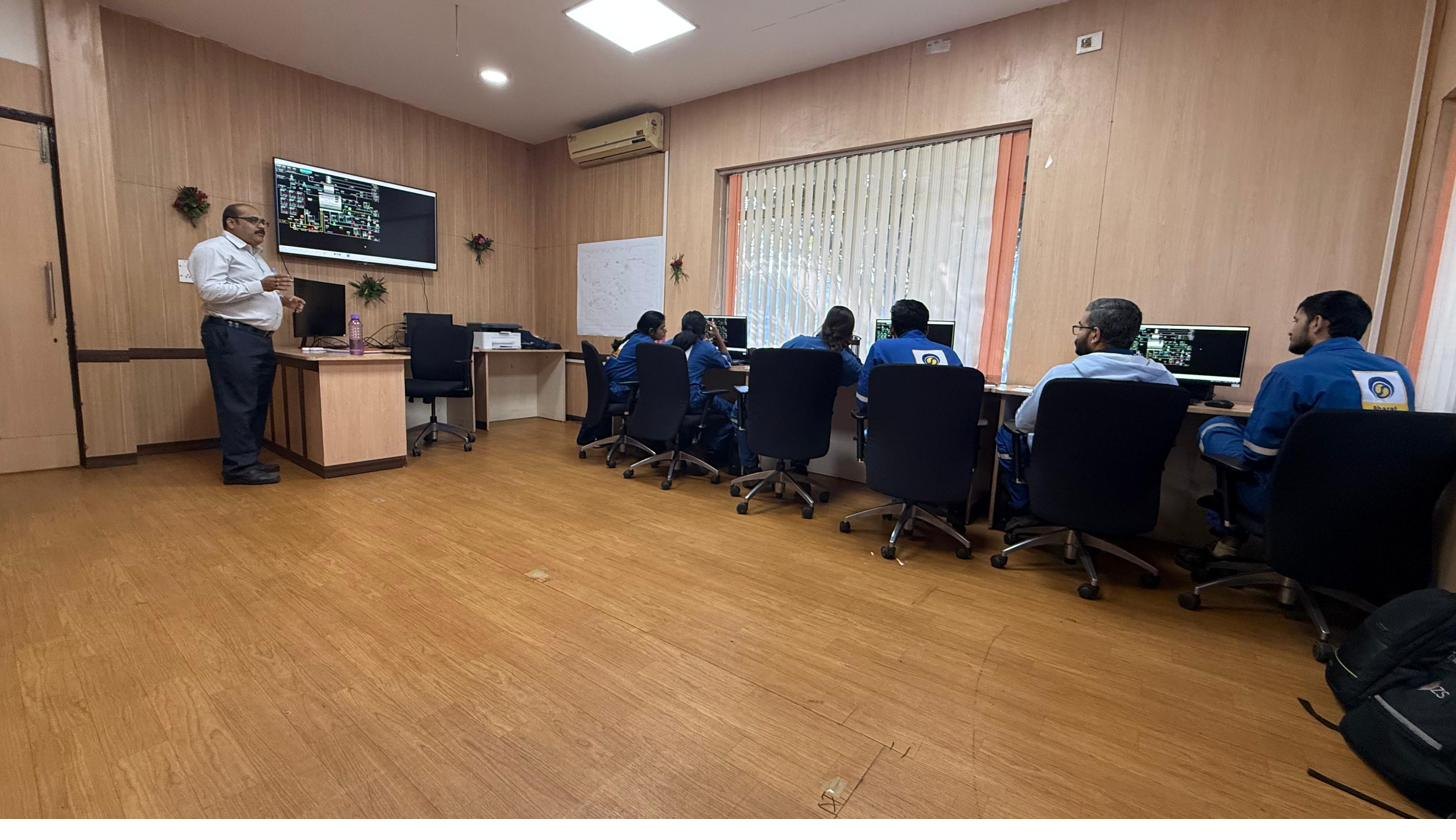
Refinery process training simulator room at Bharat Oman Refineries, Bina
Services

Everything around the simulator, not only the simulator.

Training programmes, model engineering, control system work and the long-term support that keeps a delivered simulator matching the plant it represents.

§ 01What we offer

Nine services, grouped around one job.

Making people competent on a process plant — and keeping the tools that do it accurate over time.

§ 02In detail

Who each service is for, and what you receive.

01

Operator training programmes

Instructor-led courses run on the simulator at your plant or at our facility, covering normal operation, startup, shutdown and emergency handling for the units you actually run.

Intended audience

Board and field operators, shift engineers, training officers

Main deliverables

  • Course plan mapped to your unit and shift pattern
  • Instructor-led sessions on the delivered model
  • Malfunction drills with graded difficulty
  • Logged and scored trainee performance records

Business benefit

Crews reach the console competent, and competence is documented rather than assumed.

Enquire about this service
02

Control & safety systems training

Focused training on the control layer itself: loop behaviour, controller modes and tuning, interlocks, trip logic and the protection systems that decide what the plant does when something goes wrong.

Intended audience

Instrumentation and control engineers, panel operators

Main deliverables

  • P, PI, PD and PID behaviour on live models
  • Auto/manual, direct/reverse and bumpless transfer practice
  • Interlock and trip logic walk-throughs
  • FSSS, ATRS and protection sequence exercises for power units

Business benefit

Engineers understand why the system tripped, not only that it did.

Enquire about this service
03

Academic & student training

Programmes for engineering colleges, polytechnics and ITIs built around our unit operation modules and lab-scale trainers, giving students plant exposure a campus cannot otherwise provide.

Intended audience

Chemical, instrumentation, mechanical and electrical engineering departments

Main deliverables

  • Unit operation simulation modules with animation
  • Laboratory trainers with experiment sheets
  • Faculty familiarisation sessions
  • Curriculum-aligned exercise sets

Business benefit

Graduates arrive in industry already familiar with DCS and SCADA-controlled operation.

Enquire about this service
04

Skill development workshops

Short-format workshops — typically three days to a week — delivered on site at power plants, refineries, engineering colleges and training institutes.

Intended audience

Working engineers, faculty, apprentices and skill-mission trainees

Main deliverables

  • Three-day and one-week formats
  • On-site delivery at plant or campus
  • Hands-on simulator sessions throughout
  • Participant assessment and certificates

Business benefit

A team is upskilled without travel, downtime or a long training programme.

Enquire about this service
05

Dynamic model development

Custom first-principles models written for your unit from your design and operating data, tuned until the model’s steady states and transients match the plant’s.

Intended audience

Plant technical services, project and commissioning teams

Main deliverables

  • Functional design specification signed off before build
  • Real-time dynamic model with animated mimics
  • Model acceptance testing against supplied operating data
  • Trip logic and interlock verification

Business benefit

A model your engineers recognise as their plant, not a generic approximation.

Enquire about this service
06

DCS & PLC emulation

Operator stations that reproduce your control system — Honeywell TDC-3000, ABB, Yokogawa, generic DCS or a one-to-one replica of a conventional panel.

Intended audience

Sites standardising training on their installed control system

Main deliverables

  • Emulated faceplates, graphics and alarm behaviour
  • Look-alike keyboards, touch screens and DCS-style cabinets
  • Direct-connect option where a spare console exists
  • One-to-one panel emulation for hard-panel control rooms

Business benefit

Training happens on the same interface the operator uses on shift.

Enquire about this service
07

Control system testing

Hardware-in-loop testbeds where real transmitters, controllers and final elements exchange signals with a live process model, for checkout and research.

Intended audience

Control system integrators, research groups, university laboratories

Main deliverables

  • Real-time model with field device interfacing
  • Signal conditioning and I/O configuration
  • Test scenarios covering normal and fault conditions
  • Research platform documentation

Business benefit

Control strategies and hardware are proven against plant dynamics before they meet the plant.

Enquire about this service
08

Customised engineering services

Engineering work around the simulator: pilot plant design and build, instrumented lab setups, and integration of simulation with your existing systems.

Intended audience

Training centres, R&D groups, plants building in-house capability

Main deliverables

  • Pilot plant design, fabrication and commissioning
  • Instrumented process setups under SCADA/DCS control
  • Model connectivity with external tools including MS Excel
  • Integration with existing DCS, SCADA and PLC platforms

Business benefit

One team handles the process, the instrumentation and the software.

Enquire about this service
09

Technical support & maintenance

Site acceptance testing, warranty support and long-term maintenance of delivered models — including updates when your plant is modified.

Intended audience

Every client, for the life of the installation

Main deliverables

  • Site acceptance testing with your team present
  • Instructor and administrator handover training
  • Warranty period support
  • Model updates following plant modifications

Business benefit

The simulator keeps matching the plant instead of drifting out of date.

Enquire about this service
§ 08How a project runs

Three phases. Nothing starts until the previous one is signed off.

The functional design specification is the hinge: both sides agree in writing what the simulator will do before any model code is written.

  1. 01Phase 1

    Design

    Agree the scope, gather the data, and write down exactly what the simulator will do.

    • Kick-off meeting

      Scope, boundary of simulation, training objectives and acceptance criteria.

    • Data collection

      Equipment sizes and elevations, valve and pump characteristics, component property data, five sets of operating data.

    • Functional design specification

      The document both sides sign off before a line of model code is written.

  2. 02Phase 2

    Development, testing & tuning

    Build the model, wire it to the control system, then prove it behaves like the plant.

    • Model development

      First-principles dynamic models built with our own model builder and graphics tools.

    • DCS / PLC integration

      Emulated or direct-connect operator stations, look-alike keyboards and panel hardware.

    • Model acceptance testing

      Steady-state and transient checks against the supplied operating data.

    • Startup & shutdown validation

      Every trip logic and interlock exercised in-house before the model leaves us.

  3. 03Phase 3

    Implementation

    Install on site, prove it again in front of your engineers, and hand it over.

    • Site acceptance testing

      Re-run against plant data with your operations and training teams present.

    • Training and handover

      Instructor training, trainee courses and full documentation.

    • Warranty & technical support

      Ongoing model maintenance as your plant changes.

Service enquiry

Not sure which of these you need?

Describe the problem rather than the solution — who needs to learn what, and by when. We will tell you which of these actually applies.